
The Social Media Iceberg by Charlie
January 21, 2026
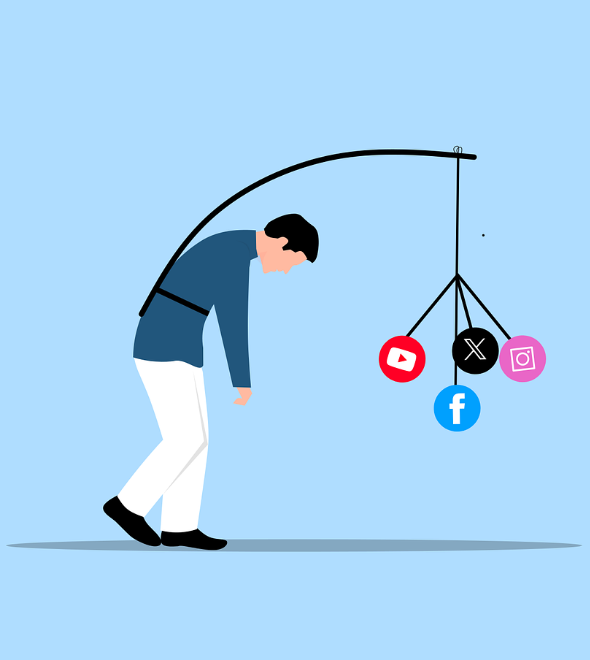
Social media—when free speech and the uninformed collide.
Don’t get me wrong, there is some solid gold on social platforms: tutorials, educational content, people promoting their businesses, cat videos . . . the list goes on.
But we’re not here to talk about that.
If you use social media for some of the things mentioned above, great, cool, amazing. Moving on.
We’re here to discuss and enlighten about the part of social media that can be compared to the small scrap of moldy cheese that plugs your pipes for a week without you even knowing it—until water is backing up your skin a few days later.
You don’t realize it until it’s too big of an issue and too late. These problems are tacit killers. While there are many more, only a few of these main problems will be discussed: Unknown and unintended reactions, follower misconceptions, and mistreating comments.
Ignoring approval makes you authentic; seeking approval makes you fit in.
Just think about it. If you put your idea out there and find nobody seems to like it, you’re obviously going to disregard your idea and try to come up with something they do like.
We seek for approval too much. But that’s not the worst part. The worst part is that we do it without even knowing it.
So let’s pretend a guy named John made a post on Twitter. Just a simple video of him expressing one of his ideas. A week later, John sees that his video has a few hundred views and a few likes and comments. The comments are just jokes about the video. With only 15 likes, John concludes that it was obviously not a good idea and scraps it. However, he then might go on to alter his thinking to appease the crowd.
That right there. That’s the issue.
When on social media, we all tend to seek approval. I myself have experienced this. Having an idea and then presenting it to others, I might not even get a response—or at least not a strong enough one to make me pursue it. I would then disregard the idea or topic because said few people did not show strong favor toward it.
This experience often results in people changing themselves for approval, and good ideas being disregarded simply because someone else said or didn’t say something about the post.
Not getting a positive response for things you post might make what you shared seem wrong or unreasonable. While this might make it appear like you don’t fit in, sometimes, that’s not a bad thing.
Oftentimes when you don’t fit in and are an outlier, you’re in fact doing the right thing while everybody else is doing the wrong—and easier thing.
Robert Frost said something like this: “Two roads diverged in a yellow wood. And I… took the one less traveled by, and that has made all the difference.” Just because you did what was uncommon does not mean you did what was wrong.
The lyrical chef NF sums up this overall thought quite nicely in one of his lyrics when he defines success:
It’s a person that would never waver
Or change who they are
Just to try and gain some credibility
So they could feel accepted by a stranger
Like a heavier body weight in wrestling, some treat a higher number of followers as ‘better.’
We’ve all seen it or heard about it: The idea that because someone has more followers their ideas are obviously better. They are always right. They are superior to everyone else.
It’s not hard to find. Go on social media and find a video of a low follower account talking about some of their ideas or noteworthy opinions. Then, go to a high follower account and find a video of them talking about their opinions.
I guarantee that the majority would agree with the high follower account. And because many on social media have fallen into this mentality, it has become the default to do this.
Just because some stranger clicked a button next to your username doesn’t mean you’re better than others.
But why is follower bias more popular? It might be more simple than some think. It’s the human’s natural sense to go with others rather than to go off by oneself. For example, would you rather play a new game, even if it sounds fun, by yourself—or play a classic, even if it’s less fun, with your friends?
It’s easier to abide with what’s more commonly done.
However, it’s a logical fallacy to say that something is the right thing to do because it’s popular. When it comes down to it, we’re basically seeking only numbers: “People chase higher numbers—grades, likes, salaries—instead of meaning.” -Barry Schwartz
In everyday life, but especially on social media, you should remember the words of William Bruce Cameror: “Not everything that can be measured is important and not everything important can be measured.”
You will make a post, you will get a comment, and you will horribly misuse it.
Not really, but that’s what everybody makes happen. So, someone on social media said something about your post. There are a few ways to handle this. Hint: Some are better than the others and some are more commonly used than the others. However, it’s again important to remember that what is commonly done is commonly not the right thing.
You could use this comment as feedback, you could ignore it, and finally *drumroll* you could use it to define your life. Which makes the most sense? Ignore it or use it as feedback, right? Right. Either one.
That’s not what people do though.
I’ve seen it myself, people treating the comments on their posts as if they are all true, or if they all are insanely important. Fun fact: that’s called someone else’s opinion.
Let’s get real here. Why do you care about what somebody else said about you or your post? That’s just what they think. Cool, moving on.
If you put it all into a flow chart, listening to others’ opinions results in you acting as someone else. Steve Jobs sums this up quite well: “Your time is limited, so don’t waste it living someone else’s life.”
You are not living as your authentic self if you listen to others’ opinions. Lao Tzu wisely said “Care about what other people think and you will always be their prisoner.”
So what’s the verdict? Completely ignore social media? Avoid overuse? Throw it in the trash?
Well, after reading this, those probably seem like good options. However, it’s important to note that these downsides of social media can all be avoided. Now that you are aware of these potential issues, you can teach yourself to notice and avoid them.
Social media will no longer be a dumpster fire for arguments and a hunt for approval.
It will become the place that it was made to be—a place to connect with others around the world to share and spread opinions and experiences. A place where free speech is not optional and the authentic collide in community.
