
The Lie We Tell Ourselves about Time by Ram
February 7, 2026
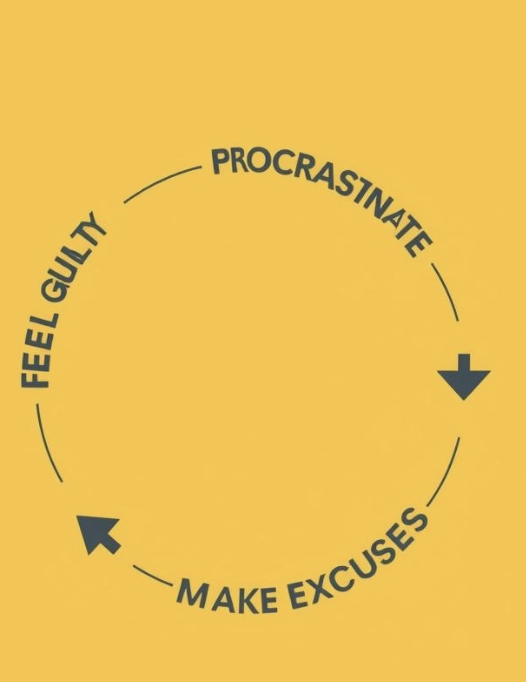
Procrastination is a trap.
It happens when your brain is fooled into thinking you have unlimited time—but in reality, you don’t.
Trust me. I’ve experienced this. I used to cram everything (work, assignments, sign ups) genuinely minutes before it was due. This is because I thought I could fit everything in a limited time period.
My perfected “art” of procrastination painted an awful picture every time.
A recent study by Kendra Cherry states: “Researchers suggest that procrastination can be particularly pronounced among students. An estimated 75% of students procrastinate regularly, and around half of these students feel that this behavior is a persistent problem.”
If you procrastinate, you’re no different than the other 75% of students.
Pablo Picasso, a famous painter, shared some important insight about time when he said, “Only put off until tomorrow what you are willing to die having left undone.”
Are you willing to die without accomplishing your goal?
Procrastination presents pain and disappointment.
A real life example of Procrastination is me In my 9th grade English class
The feeling of your heart pulling you down is agonizing when you look back at your procrastinating. You regret it, and you find yourself missing opportunities that you may never have a chance at again.
In my 9th grade English class, I used to procrastinate a lot, thinking I had more than enough time to complete my work. When I first saw the “missing” notification, I was not that concerned, because I knew I could still complete it for late points . . . but later panic set in as I scrambled to get it done minutes before the deadline to recover the late points.
Fortunately I turned it in, but unfortunately since I completed it under pressure I ended up getting an 80. But that’s not even the worst part: the worst part was that because the awful grade was barely off, I did not get my AP Seminar recommendation.
It was painful.
All my friends got in and I felt left out.
This is what I call “Post Procrastination Trauma.” You reflect on the procrastination you chose in the past that affects you in the present—in a negative or positive way. (Most of the time it’s negative.)
Lets switch the focus to some wise words by Dr. Susan Danial: “Procrastination often causes stress, guilt, or anxiety related to the loss of productivity or opportunities which can promote even more procrastinating.”
Procrastination occurs when your brain assumes there is enough time to complete a task just before the deadline, which may be true for some people but often leads to problems that stress you down later in the road.
To back that up I found a quote from the article “What is procrastination?” It states that “some major cognitive distortions lead to academic procrastination. Students tend to:
- Overestimate how much time they have left to perform tasks
- Overestimate how motivated they will be in the future
- Underestimate how long certain activities will take to complete”
These particular factors can affect a person in either a good or bad way.
They stop 99% of the students from achieving their full potential, and the other 1% who overcome these obstacles usually end up reaching their goal. So always keep in mind that there are deadlines and due dates for assignments or applications. This is by far the biggest hurdle for teens to overcome.
A University of Vermont study examined when college students completed 23 self-paced quizzes over a 9-week semester. Procrastination was measured by how many quizzes students took during the final five weeks. Students who completed more quizzes near the end of the semester were considered greater procrastinators.
Take a look at one of the most effective ways out of the 100s out there that is proven to lower procrastination
Set Smart goals.
According to Megan Bruneau, there is an acronym that you can use called “smart” which stands for:
S – Specific (review Chapter 5 on cell respiration)
M – Measurable (complete 20 practice questions)
A – Attainable (study for 30 minutes using my notes)
R – Realistic (focus on one chapter, not the whole unit)
T – Time-Bound (finish by 8:30 PM tonight)
These help you complete tasks and procrastinate less.
Yes, procrastination is a trap—but one that can be avoided by not letting your brain make a fool out of you.
