
The Lady Behind it All by Sana
March 23, 2026
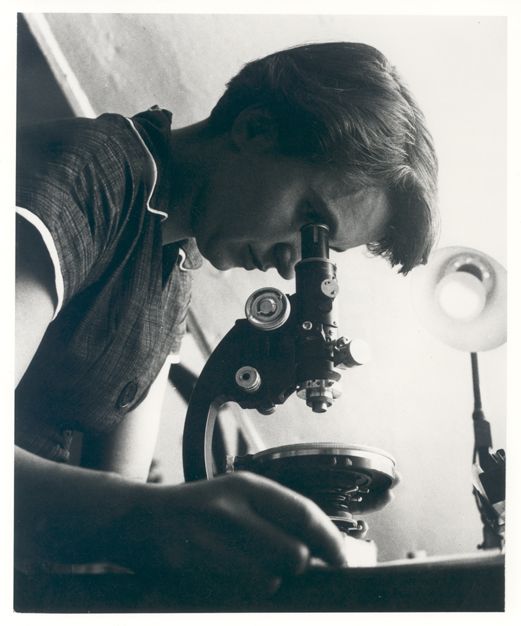
From the 1940s to the 1950s, the search for DNA was an infamous process of trial and error. The race to find the shape of DNA and how heredity worked began. And when the chaos subsided and the finish line was crossed, it was biologist Watson and Crick, two men, who were allotted the credit and fame. But behind the fame and curtain, standing in their shadows, was someone else holding the research that made them famous.
Rosalind Franklin. The Dark Lady of DNA.
The overlooked scientist grew up in a house surrounded by education due to her father’s passion in science and profession in college teaching. Yet when Rosalind expressed her desire to follow her father’s footsteps in the field of science, he frowned upon this because she was a woman.
This heavy burden weighed on her chest her entire life, but her passion helped keep her shoulders up.
When Rosalind began work as a chemist and x-ray crystallographer, she was a mere joke in the eyes of the men that worked alongside her. She was never taken seriously, yet this hate fueled her to stay mysterious and work without pride.
Caring deeply for research over the bright spotlight, Rosalind worked in the dark basement of King’s College, causing her to be isolated from the other scientists. As a chemist she lived by the idea that, “…a scientist should be judged on his or her merits, and not on the basis of being a man or a woman” (Rosalind Franklin).
Though Rosalind’s father disagreed with this philosophy, he was an immense inspiration to her.
Franklin never intended on finding the shape of DNA. She mistakenly used her x-ray known as “Photograph 51” to put down the final piece, completing the puzzle. But behind her back, a colleague who notoriously looked down on Rosalind, unrightfully showed her x-ray’s to Watson and Crick, two biologists the colleague knew were furiously trying to understand DNA.
When Rosalind’s research was snagged from the darkness of the basement and into the light of the world, Watson and Crick published her findings, giving little credit to Rosalind Franklin.
As the news of their findings spread more and more, Rosalind’s name began to shrink and shrink. Still she stayed silent, focused on her findings, and being true to her work.
But no matter how much she loved her job, it was her ultimate killer. Through her endless x-rays and research, the radiation cursed her with cancer, ending her life short at the age of 37.
And even with her death the praise for Watson and Crick did not end. In 1962, they were awarded a Nobel Prize, giving credit to her college, the one that stole her research.
And due to her death, she was not able to get a Nobel Prize due to her inability to accept it.
Sydney Brenner, a Nobel Prize geneticist, believes that, “…if Franklin had been a man, she would have been awarded a Nobel Prize in her lifetime” (Sydney Brenner).
No matter how hard she tried to fight the misogynistic idea that she could not work in the science field, that absurdity followed her to the grave. But Rosalind Franklin cared more about being reserved than the fame.
She accomplished much in her life—and to her personally, she fulfilled her job to her fullest extent.
